

With the O Level Chemistry Practical Exam on 2nd October, it’s crucial to prepare thoroughly. While it may seem daunting, understanding the format and techniques will help you navigate the exam with ease. This guide provides essential tips to boost your confidence and performance.
1. Format of Practical Exam

Knowing the format of the paper is essential to plan your time effectively and to approach each section with confidence. According to the SEAB website, the practical exam assesses several key areas:
- Planning (P): You’ll need to outline the procedure, identify variables, assess risks and explain how to use data to reach a conclusion.
- Manipulation, Measurement and Observation (MMO): This tests your ability to set up and use equipment, make accurate measurements and record observations.
- Presentation of Data and Observations (PDO): Presenting data in a clear and precise manner is essential.
- Analysis, Conclusion and Evaluation (ACE): You must analyse data, draw conclusions and evaluate errors.
The exam lasts 1 hour 50 minutes, is worth 40 marks and contributes 20% of the total grade.
2. Planning Task
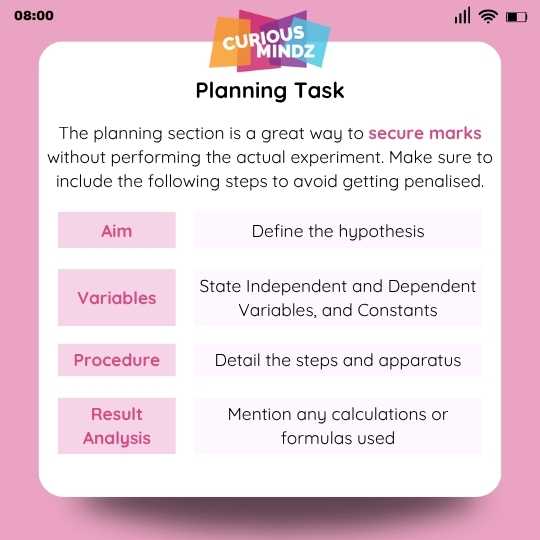
The planning section is a great way to secure marks without performing the actual experiment. Make sure to include the following steps to avoid getting penalised:
- Aim / Approach: Define the hypothesis.
- Variables: State independent and dependent variables, and constants.
- Procedure: Detail the steps and apparatus (e.g., set up burette and add 50 cm³ of Q).
- Result Analysis: Mention the calculations or formulas you’ll use.
- Assumptions: State any assumptions you make during the experiment.
3. Errors
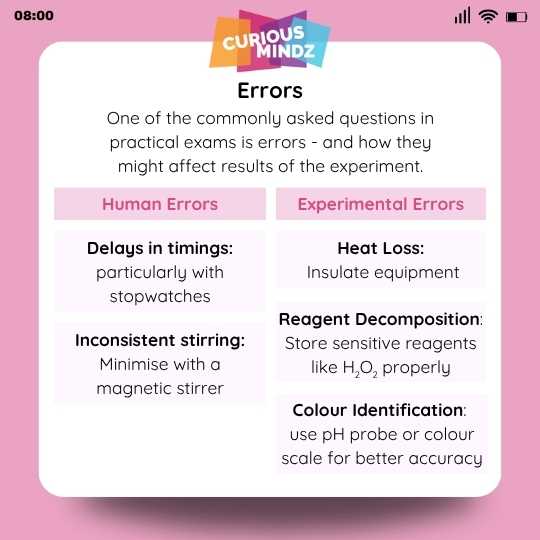
One of the commonly asked questions in practical exams is the errors. Here are some common errors/answers to such questions:
- Human Errors:
- Delays in timing, particularly with stopwatches.
- Inconsistent stirring can be minimised with a magnetic stirrer.
- Experimental Errors:
- Heat Loss: Insulate equipment or conduct the experiment quickly.
- Reagent Decomposition: Store sensitive reagents like hydrogen peroxide properly.
- Colour Identification: Use a pH probe or colour scale for better accuracy.
4. Graph Drawing Techniques
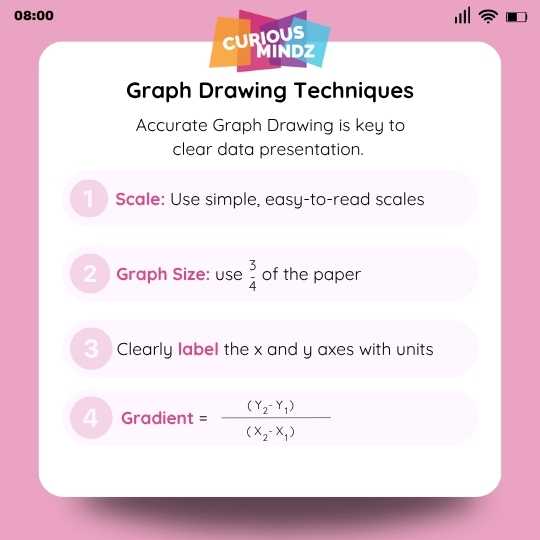
Accurate graph drawing is key to clear data presentation. Remember:
- Scale: Use simple, easy-to-read scales.
- Graph Size: Use ¾ of the paper.
- Labelling: Clearly label the x and y axes.
- Gradient: (Y2-Y1) / (X2 – X1) (Y2-Y1)(X2-X1)
5. Mastering Titration
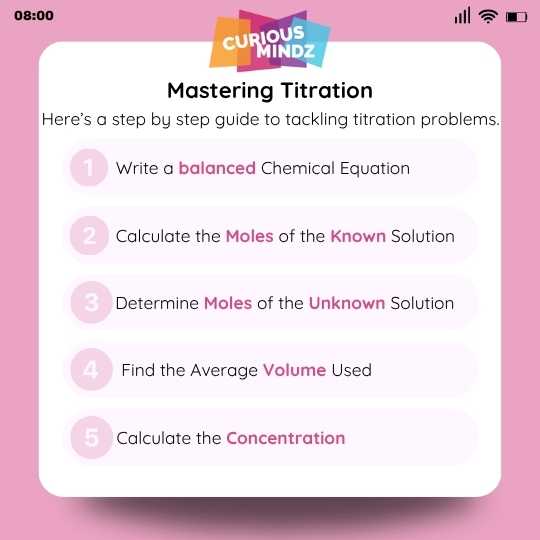
Titration is a common component of practical exams. To excel, it’s crucial to first understand the core principles of titration. Essentially, titration is a method used to determine the concentration of an unknown solution by reacting it with a solution of known concentration. In this process, the known solution, called the titrant, is added from a burette to a measured volume of the unknown solution until the reaction reaches completion.
Here’s a step-by-step guide to tackling titration problems:
- Write the Balanced Chemical Equation: Start by writing the balanced equation for the reaction taking place.
- Calculate the Number of Moles of the Known Solution: Determine the number of moles of the titrant used, based on its concentration and the volume used.
- Determine the Number of Moles of the Unknown Solution: Use the mole ratio from the balanced equation to calculate the number of moles of the unknown solution.
- Find the Average Volume Used: Record the average volume of the titrant used in the reaction.
- Calculate the Concentration: Finally, use the formula Concentration = Number of moles / VolumeC oncentration = Number of MolesVolume to find the concentration of the unknown solution
An important formula to remember:
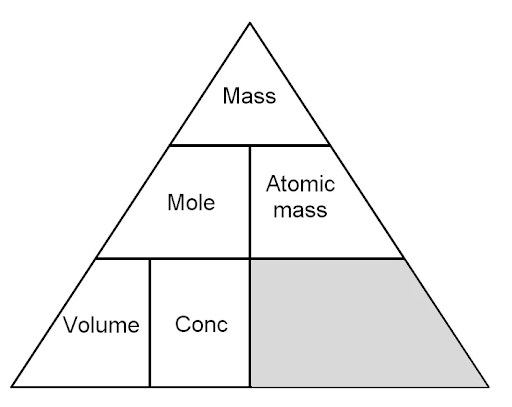
Other things to take note of:
- Accuracy: Take burette readings to 0.05 cm³ (2 decimal places).
- Meniscus Reading: Always read the bottom of the meniscus.
- Indicator Knowledge: Know the colour changes for indicators like methyl orange.
Titration Table: Present data clearly in a table.
| Titration Number | 1 | 2 | 3 |
| Final Burette Reading (mL) | |||
| Initial Burette Reading (mL) | |||
| Titre (mL) |
| ACID (H2SO4) | ALKALI (KOH) | |
| Concentration (mol/dm3) | ||
| Volume (cm3) | ||
| No. of Moles | ||
| Mole Ratio |
7. Essential Calculations and Formulas
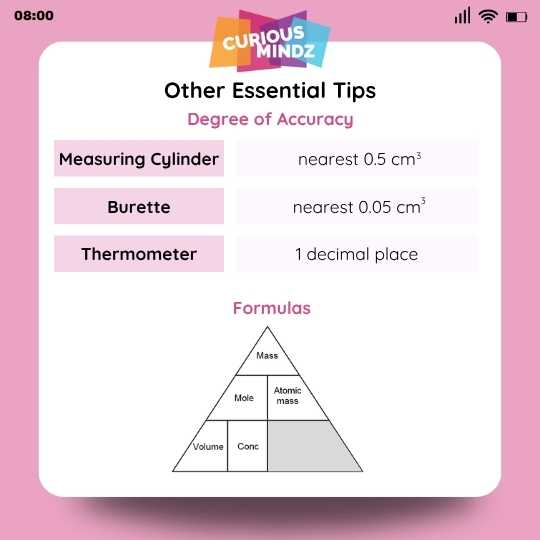
Familiarise yourself with important calculations:
- Concentration:
- Number of moles divided by volume.
- Number of Moles:
- For volume, divide by 24 dm³.
- For mass, divide mass by molar mass.
Let Us Help You Ace Your Practical Exams!
In Curious Mindz Online Tuition, we offer expert guidance to help students master their O Level Chemistry Practical Exams. Our tutors provide comprehensive support, ensuring you’re fully prepared to achieve your best results. Join our tuition sessions and sharpen your skills to ace the exam with confidence!
About Curious Mindz
Curious Mindz offers expert-led online tuition programmes in Singapore for Primary and Secondary students, covering English, Math and Science.
Our small-group live classes are designed to help your child build strong academic foundations, develop confidence and achieve success in school and national exams. Whether your child is preparing for PSLE, O-Levels or N-Levels, or simply needs academic support, we’re here to help.
Book your Free Trial Class today and experience the difference with Curious Mindz!